
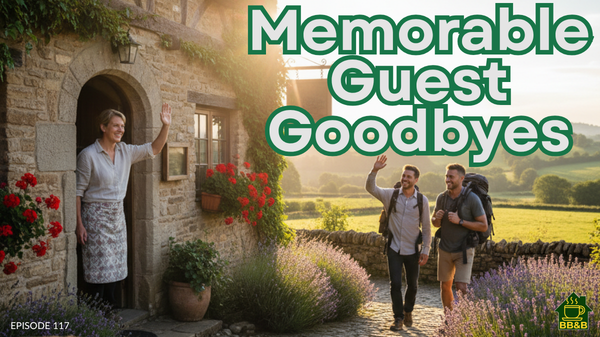

Many bed and breakfast owners focus on arrivals and breakfasts, yet the moment guests leave often shapes the story they tell afterwards.
Understanding how to create a warm, thoughtful Guest departure can quietly turn first-time guests into loyal visitors.
When the Goodbye Matters More Than the Hello
If this feels familiar, you are not alone.
Your guests finish breakfast. They gather their bags. You chat for a moment by the door.
Then they leave and a few seconds later you stand in the hallway thinking:
“Was that… good enough?”
Running a bed and breakfast is full of moments like this.
You spend hours preparing breakfast.
You clean rooms carefully.
You welcome guests warmly.
Yet the final moment of their stay often passes quickly. Almost quietly.
And here is the strange truth.
The departure is often the moment guests remember most.
It is the last chapter of their experience. The final note in the story they tell friends.
Welcome to another episode of the Beds, Breakfast & Business.
If you haven’t done so yet, sign up and, if applicable, ring the bell so you don’t miss any future episodes.
Today we are talking about something simple, but powerful. How you say goodbye.
Many B&B owners spend a lot of energy thinking about check-in and breakfast.
Both are important, but the departure moment is where emotion meets memory.
It is also where future bookings quietly begin because when guests drive away, they carry three things with them:
Their memories
Their feelings
And their story about your place
And that story determines whether they return or recommend you.
In the “Build Your B&B: From Dream to Doors Open” course, one idea appears again and again.
Running a bed and breakfast is not just about accommodation. It is about creating experiences that guests remember long after they leave.
That memory often forms in the final moments and yet most B&B owners never intentionally design that moment. It just happens.
In this episode, we will explore something helpful.
A simple way to think about guest departures so they feel warm, natural, and memorable.
Not scripted.
Not awkward.
Just thoughtful.
If you are new to running a B&B, or thinking about opening one, you will find more insights like this inside the “Your B&B Starter Blueprint” download. It walks through the foundations of building a place guests rave about.
Later in this episode, I will share one small departure idea that has quietly created repeat guests for many innkeepers. It takes less than a minute, but guests remember it.
Before we go further, I am curious about something.
When guests leave your B&B, what usually happens in those last few minutes?
Is it relaxed?
Rushed?
Or somewhere in between?
Let me know in the comments. I always enjoy hearing how different inns handle this moment.
Because the goodbye matters more than most people think.
.
.
The Hidden Problem With Guest Departures
Let us start with a simple observation.
Most B&B departures are accidental.
Not bad.
Not rude.
Just… unplanned.
Guests finish breakfast.
They gather bags.
They thank you politely.
Then the moment passes.
From a guest perspective, nothing feels wrong, but nothing feels memorable either. That is the quiet problem. The bed and breakfast industry thrives on personal experiences.
Unlike hotels, where guests may never meet the owner, B&B guests often build small connections during their stay.
They chat at breakfast.
They ask about local walks.
They share travel stories.
This is one of the great strengths of the B&B model.
Guests choose these properties because they want warmth and personality, yet many departures feel surprisingly transactional.
“Safe drive home.”
“Thanks for staying.”
Door closes.
Car leaves.
Done.
It is not wrong, but it misses an opportunity because human memory works in a curious way.
Psychologists often talk about something called the “peak-end rule.”
In simple terms, people remember two moments most strongly:
The emotional peak
The ending
So even if your guest had a wonderful breakfast and a lovely room, the final moment still influences how they remember the entire stay.
Think about restaurants. Have you ever enjoyed a great meal, then waited fifteen minutes for the bill?
Suddenly the memory shifts.
The same thing can happen in hospitality not because anything went wrong, but because the ending lacked intention.
Now let me add another layer.
Many B&B owners are extremely busy during departure time.
Rooms must be cleaned.
Laundry begins.
New guests arrive later.
So the goodbye becomes quick, understandably quick. But here is the important insight.
A memorable departure does not require extra work. It requires awareness, because guests do not expect theatre.
They expect warmth.
A small human moment.
This is where many experienced innkeepers quietly shine. They create departure rituals that feel natural.
Nothing dramatic. Just thoughtful, and over time these moments become part of the property’s identity.
Guests begin to expect them, some even talk about them in reviews.
.
.
What to Look For in a Meaningful Guest Departure
Let us explore what makes a departure feel special.
Not complicated. Just meaningful.
When you listen to guest stories about memorable stays, certain patterns appear.
They rarely mention luxury.
They rarely mention expensive extras.
Instead, they remember small human moments.
A conversation.
A gesture.
A personal detail.
These are the ingredients of a meaningful departure.
So what should you look for?
Let us explore a few ideas.
.
.
Look for a Moment of Recognition
Every guest wants to feel seen, this does not mean long conversations. It simply means acknowledging them as people, not room numbers.
For example, imagine this scenario.
A couple stayed two nights. During breakfast they mentioned hiking a local trail and when they leave you say:
“I hope the weather stayed clear for your hike yesterday.”
That small sentence changes the goodbye. It tells guests you were listening. It tells them their stay mattered and it takes only a few seconds.
Great B&B hosts often remember tiny details like this.
Not perfectly.
Just enough to create warmth.
.
.
Look for a Natural Pause
Another key element is timing.
The best departure moments happen during a pause. Not while guests rush to the car. Often it happens right after breakfast or while they collect bags.
This is why many innkeepers develop simple routines.
They walk guests to the door or chat briefly in the hallway.
These small rituals create space for connection. Without that pause, the goodbye feels rushed. With it, the departure feels intentional.
.
.
Look for a Small Gesture
A gesture can be powerful, but it does not need to cost money.
For example:
A handwritten thank-you card
A small local biscuit for the road
A printed list of nearby attractions for next time
These gestures feel personal because they reflect the spirit of the property.
Many successful B&Bs use local touches.
A jar of local jam.
A bakery pastry.
A small map with favourite walks.
Guests often remember these simple details more than expensive amenities.
.
.
Look for Opportunities to Continue the Story
A great departure does something subtle. It suggests a return. Not a sales pitch. Just a gentle idea.
For example:
“If you visit in autumn, the valley turns completely gold.”
Or:
“Next time you come, I will show you the coastal path locals love.”
These comments plant a seed. Guests begin imagining another visit.
The best repeat bookings often start with that small suggestion.
.
.
Look for Emotional Closure
Every stay tells a story.
Arrival
Exploration
Breakfast conversations
Departure is the final page, so it helps when that moment feels complete.
A sincere thank-you.
A short chat about their plans home.
Nothing dramatic.
Just closure.
Because when guests drive away feeling appreciated, they carry that emotion with them and that emotion often becomes the review they write later.
.
.
Look for Emotional Closure
Let’s shift perspective for a moment.
Most innkeepers think of departure as the end of the visit, but experienced hosts see it differently.
They see it as the start of the next relationship.
That small shift changes everything, because hospitality is not simply about a place to sleep. It is about the memory guests carry home with them and memories behave in interesting ways.
People rarely remember every detail of a stay. They remember snapshots.
The smell of fresh coffee.
A laugh over breakfast.
A warm goodbye at the door.
Those snapshots become the story guests tell and stories travel.
Friends hear them.
Family hears them.
Future guests hear them.
That is why departure matters. It closes the emotional loop of the visit.
.
.
The Story Guests Take Home
Imagine two different departures.
In the first one, the guest checks out quickly.
They leave their key.
You thank them.
They walk out.
Nothing went wrong.
But nothing stands out either.
Now imagine a slightly different ending.
You walk them to the door.
You thank them by name.
You say something simple like:
“I’m glad the weather held for your cycling trip.”
The moment lasts ten seconds longer, yet it feels completely different.
One departure feels transactional. The other feels human and that difference becomes the memory.
.
.
Why This Matters for Independent B&B Owners
Large hotels operate through systems.
Bed and breakfasts operate through relationships.
That is one of the reasons guests choose them.
They want warmth.
They want personality.
They want to feel like someone cares that they visited. This is also why small gestures often outperform expensive upgrades.
A hotel might offer luxury bedding.
A B&B offers conversation.
A hotel provides efficiency.
A B&B provides connection.
And departure is the final expression of that connection.
.
.
The Emotional Finish Line
Think about a marathon runner crossing the finish line.
The race was long. The finish lasts seconds, yet the finish is what everyone remembers.
Guest departures work the same way.
The stay may last several days. The goodbye lasts minutes, but emotionally, it carries weight.
That moment signals closure.
It also signals appreciation.
Guests leave thinking:
“They were genuinely happy we stayed.”
That feeling is powerful because people naturally return to places where they feel valued.
.
.
The Ripple Effect of a Good Goodbye
Let’s talk about reviews.
Most B&B owners understand how important reviews are, but the timing of a review is interesting.
Guests usually write them after they return home.
That means their memory of the stay has already settled.
What shapes that memory?
The last moments.
If guests left feeling relaxed and appreciated, that feeling often appears in the review.
You might see comments like:
“Wonderful hosts.”
“They made us feel so welcome.”
“We will definitely return.”
Those words often come from emotional impressions rather than physical features.
Guests may not describe your bed linens, but they will describe how you made them feel and departure is the moment when that feeling becomes final.
.
.
Why Clarity Helps Here
If you are an innkeeper listening to this episode, you may be thinking something like this.
“I already say goodbye. Isn’t that enough?”
And yes, often it is.
But clarity helps because it transforms accidental moments into intentional ones.
Instead of hoping departures go well, you design a simple rhythm.
Nothing forced.
Nothing awkward.
Just thoughtful.
This is the difference between reactive hosting and intentional hospitality. One happens randomly, the other becomes part of your culture.
.
.
One Practical Shift That Makes Departures Memorable
Let’s make this practical. If there is one shift that improves guest departures instantly, it is this:
Create a simple departure ritual.
Not a performance.
Just a small, repeatable moment.
.
.
What Is a Departure Ritual?
A departure ritual is a short pattern that happens with every guest.
It might include three small elements:
A personal thank you
A brief conversation
A small gesture
Together these create a memorable moment and importantly, they feel natural.
Here is one example used by several successful B&B owners.
When guests are ready to leave, the host walks them to the door. They thank them by name. Then they say something specific about their stay.
For example:
“I’m glad you enjoyed the farmers market yesterday.”
Then they offer a final small gesture, perhaps a biscuit for the road or a small printed card with local recommendations for next time.
That is it.
The moment lasts less than a minute, yet guests remember it.
.
.
Why Rituals Work
Rituals work because they create consistency.
You do not have to invent a goodbye each time. The structure already exists.
This also removes stress for new innkeepers. When you know the rhythm, the moment feels relaxed.
Guests sense that calm. They feel welcome rather than rushed.
.
.
A Quiet Benefit: Repeat Guests
There is another advantage to departure rituals.
They encourage repeat visits without sounding like sales.
For example:
“If you visit in spring, the gardens here are beautiful.”
Or:
“Next time you come, I’ll show you our favourite coastal walk.”
Notice the tone.
It is not promotional. It is conversational, yet it invites guests to imagine returning.
Over time, these small comments build loyalty.
.
 .
.
Guests won’t remember your thread count.
They’ll remember how you made them feel.
“Your B&B Starter Blueprint” shows you how to turn comfort into connection.
Download it now! You can find a link in the show notes.
.
.
What small thing do you currently do when guests leave your B&B? Is it a quick thank you, a chat at the door, or something unique?
Leave a comment.
.
Here Are Your Key Takeaways
- Small moments shape big memories
- Departure influences guest reviews
- Connection beats luxury upgrades
- Simple rituals create consistency
- Warm goodbyes encourage repeat stays
.
In Conclusion
Running a bed and breakfast is not simply about rooms and breakfasts. It is about the experiences guests carry home.
One of the most powerful moments in that experience is the goodbye.
When departures happen accidentally, they fade into the background, but when they happen with intention, they become memorable.
A warm farewell, a small gesture, and a brief conversation can transform the final minutes of a stay into a lasting memory.
Guests leave feeling appreciated, and when people feel appreciated, they return.
If you would like help designing these kinds of guest experiences, the downloadable “Your B&B Starter Blueprint” is available in the show notes. It walks through the foundational steps of building a B&B guests rave about.
And if you want deeper support with planning, launching, or improving your inn, you can explore the full “Build Your B&B: From Dream to Doors Open” course, where we cover everything from guest experience to marketing and operations.
For further reading, you might also enjoy How to Craft a Warm Greeting That Guests Remember Forever, Episode 22. You can find all our posts on BedsBreakfastsBusiness.com
If you enjoyed today’s episode, make sure you subscribe so you do not miss future ones.
And if the podcast helps you, feel free to buy us a coffee. It keeps the ideas flowing and the microphones on.
Next episode, we’ll talk about:
“Why Does Running a B&B Feel Harder Than Expected?”
A topic many new innkeepers quietly struggle with.
Until then, remember this.
You don’t need to have it all figured out — you just need the next right step. Thanks for listening and I’ll see you next time.
You dream of sunny porches and happy guests…
But there’s a to-do list taped to the fridge.
Get the “Your B&B Starter Blueprint” download. It’s how you start smart, not scrambled.
Grab your copy!
Sign up now!


.
A Division of Keystone Hospitality Property Development